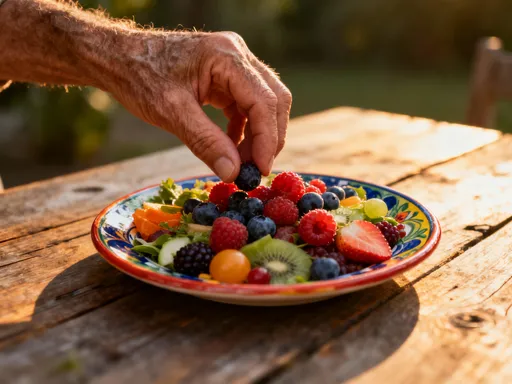
For years, I chased quick fixes—detox teas, juice cleanses, you name it. Nothing stuck. Then I started practicing qigong, not just for movement, but for balance. Slowly, I noticed something surprising: my cravings changed, my energy leveled out. It wasn’t magic—it was alignment. This shift led me deep into traditional Chinese dietary principles. What I discovered reshaped how I eat. If you're seeking lasting wellness, it might change your approach too.
My First Steps with Qigong – A Wake-Up Call
When I first stepped onto the mat for a morning qigong session, I didn’t expect much. I thought it would be gentle stretching with a bit of breathing—something to ease joint stiffness and calm my mind. What I didn’t anticipate was how deeply it would recalibrate my relationship with my body. The practice began in stillness: standing with feet shoulder-width apart, spine aligned, hands resting gently at the lower abdomen. The instructor guided us to breathe slowly, to feel the air moving in and out, to notice where tension gathered and where ease lived. In those quiet minutes, something shifted—not dramatically, but steadily. I became aware of sensations I had ignored for years: a dull ache in my lower back, the tightness across my shoulders, the restless flutter in my stomach upon waking. These weren’t just physical signals; they were messages.
Over time, I began to recognize that qigong wasn’t only about movement or breath. It was about presence. Each session created a space where I could listen—truly listen—to what my body was saying. And as that awareness grew, so did a quiet curiosity about how my food choices might be influencing those very sensations. I had long treated meals as fuel, often eaten quickly between tasks, rarely considered beyond calories or convenience. But now, I wondered: could the sluggishness I felt each afternoon be connected to the processed sandwich I ate at noon? Could the bloating after dinner relate to how fast I chewed? These questions didn’t come with answers at first, but they planted seeds of change. Wellness, I began to understand, wasn’t a checklist of isolated habits. It was the integration of movement, breath, awareness, and nourishment.
Qigong taught me that the body speaks in subtle tones, not shouts. It doesn’t demand attention through crisis alone; it offers guidance through sensation. The practice didn’t fix my digestion or erase my cravings overnight. Instead, it gave me the tools to observe, to pause, and to respond with care. This was the beginning of a deeper dialogue—one that would eventually lead me to the wisdom of traditional Chinese medicine and its time-honored understanding of food as medicine.
The Hidden Link Between Energy and Food in TCM
In traditional Chinese medicine (TCM), the concept of Qi—pronounced “chee”—is central to health. Qi is the vital energy that flows through the body, supporting every function from circulation to immunity to mental clarity. When Qi is strong and moving freely, we feel vibrant and resilient. When it is depleted or blocked, fatigue, discomfort, or imbalance can follow. What many people don’t realize is that food plays a direct role in the quality and quantity of our Qi. It’s not just about macronutrients or vitamins; it’s about energetic input. Every bite we take carries a thermal nature—warming, cooling, or neutral—and an effect on the body’s internal environment. This perspective shifts the question from “How many calories is this?” to “How will this food make my energy feel?”
For example, foods like ginger, cinnamon, and cooked root vegetables are considered warming in TCM. They support digestion and circulation, making them ideal during colder months or for individuals who often feel cold. On the other hand, cucumber, watermelon, and raw salads are cooling and can help reduce internal heat—beneficial in summer or for those prone to restlessness and inflammation. Processed foods, however, fall outside this balanced framework. They are often seen as creating “dampness” or “phlegm” in the body—conditions that don’t refer to mucus alone but to sluggish metabolism, mental fog, and digestive discomfort. These foods lack the vital Qi found in whole, natural ingredients and can disrupt the smooth flow of energy.
As I deepened my qigong practice, I began to notice how different meals affected my energy. After a lunch of cold leftovers and a sugary drink, I’d feel heavy and mentally dull—classic signs of dampness in TCM. But after a warm bowl of broth-based soup with vegetables and a small portion of rice, my mind felt clearer and my body lighter. This wasn’t coincidence; it was feedback. The body was telling me which foods supported my Qi and which drained it. I didn’t need a strict diet plan or a calorie counter. I needed only to pay attention. Over time, my choices began to shift naturally—not because I was restricting, but because I was aligning with what made me feel truly nourished.
How Qigong Tuned My Body’s Natural Signals
One of the most profound changes I experienced through qigong was an increase in interoception—the ability to sense what’s happening inside the body. Before, I relied on external cues to decide when and what to eat: the clock, social settings, or emotional triggers. I ate because it was noon, not because I was hungry. I finished everything on my plate because it was there, not because I was still hungry. Emotional stress often led to mindless snacking, and digestive discomfort was so routine I barely noticed it. But as my qigong practice deepened, so did my sensitivity to internal signals. I began to distinguish true physical hunger from habit or emotion. I noticed subtle cues: a gentle emptiness in the stomach, a slight dip in energy, or a quiet clarity that came after fasting for a few hours.
This newfound awareness extended to digestion as well. I started to observe how my body responded to different foods and eating patterns. For instance, when I ate too quickly, I’d feel bloated and restless. When I combined too many raw or cold foods in one meal, my digestion slowed, and I’d feel lethargic afterward. But when I ate warm, cooked meals in a calm environment, my digestion improved, and I felt sustained for longer. These weren’t dramatic revelations, but quiet confirmations of what my body had been trying to say all along. Qigong didn’t give me new instincts; it helped me reconnect with the wisdom already within me.
There was a moment, about three months into my practice, when this shift became undeniable. After a morning session, I stood in my kitchen, contemplating a bowl of sugary cereal. Normally, I would have poured a bowl without thinking. But that day, I paused. I placed a hand on my lower abdomen—the dantian, the energy center we often focus on in qigong—and asked silently, “Will this serve me?” The answer came not as a thought, but as a physical sensation: a slight tightening, a quiet resistance. I chose a bowl of oatmeal with cinnamon and apple instead. It wasn’t a rule I was following; it was intuition guiding me. In TCM, this is known as “wise hunger”—the body’s innate ability to guide us toward what it truly needs. Qigong didn’t impose discipline; it restored trust in my body’s intelligence.
The Five Elements and What They Say About Eating
Traditional Chinese medicine maps the body and nature through the Five Elements: Wood, Fire, Earth, Metal, and Water. Each element corresponds to a season, an organ system, an emotion, and a taste. This framework isn’t mystical—it’s a practical guide to living in harmony with natural cycles. As I learned more, I began to see how my eating habits could align with these rhythms. For example, spring is associated with the Wood element, the liver, and the sour taste. This is a time of growth and renewal, and TCM suggests incorporating more leafy greens, sprouts, and lightly sour foods like lemon or vinegar to support liver function and clear stagnation from winter.
Summer aligns with the Fire element, the heart, and the bitter taste. During these warmer months, I started including more bitter greens like dandelion or kale, which are believed to clear heat and support cardiovascular health. I also reduced heavy, greasy foods that could increase internal heat and instead focused on cooling dishes like steamed vegetables, congee, or herbal teas. The Earth element, linked to late summer and the spleen and stomach, emphasizes the sweet taste—not refined sugar, but the natural sweetness of grains, squashes, and root vegetables. This became the foundation of my meals: warm, nourishing, and easy to digest.
As autumn arrived, the Metal element came into focus, connected to the lungs and the pungent taste. This is a time of letting go, both emotionally and physically. I incorporated more pungent foods like garlic, onion, and ginger to support respiratory health and circulation. Finally, winter corresponds to the Water element, the kidneys, and the salty taste. This is a time for conservation and deep nourishment. I shifted toward warming stews, bone broths, and cooked grains, eating less but more substantial meals to conserve energy. By aligning my diet with the seasons, I noticed improvements not only in digestion but also in mood and energy levels. I wasn’t fighting my body’s needs; I was honoring them.
Simple Dietary Shifts That Actually Stick
One of the most liberating aspects of this approach is that it doesn’t require drastic changes or rigid rules. Instead, it invites small, sustainable shifts that work with the body rather than against it. The first practice I adopted was mindful eating: sitting down for meals, turning off screens, and giving full attention to the food. This simple act transformed my relationship with eating. Without distractions, I could notice flavors, textures, and fullness cues more clearly. I began to enjoy my food more, not less.
The second shift was chewing thoroughly. In TCM, digestion begins in the mouth, and the spleen Qi—responsible for transforming food into usable energy—relies on proper breakdown. I started aiming for 20 to 30 chews per bite. At first, it felt slow, even tedious. But over time, I noticed that I experienced less bloating, fewer digestive complaints, and a greater sense of satisfaction from smaller portions. The third practice was stopping at 80 percent full, a principle known as Hara Hachi Bu, which, while rooted in Japanese tradition, aligns closely with TCM’s emphasis on protecting digestive fire. By not overfilling the stomach, I allowed space for proper digestion and energy flow.
What made these habits stick wasn’t willpower—they were supported by awareness. Each time I chewed slowly, I felt more grounded. Each time I stopped before feeling stuffed, I noticed a steadier energy throughout the day. These weren’t restrictions; they were acts of care. And because they felt good, I wanted to continue them. There was no guilt for occasional indulgences, no shame for imperfection. This approach wasn’t about purity or punishment. It was about rhythm—finding a natural, sustainable way of eating that honored my body’s needs.
Food as Part of a Holistic Practice – Beyond the Plate
As my awareness deepened, I began to see that eating well wasn’t just about what was on the plate. It extended to how food was prepared, when it was eaten, and the mindset brought to the meal. Cooking, once a chore, became a form of moving meditation. Chopping vegetables with focused attention, stirring a pot with intention, even washing dishes mindfully—these acts became part of my wellness practice. I noticed that when I cooked with calmness and gratitude, the food tasted better, and I felt more connected to the process of nourishment.
Meal timing also became more intentional. I began to eat my largest meal at midday, when digestive fire is strongest, and have a lighter dinner, aligning with the body’s natural rhythm. I avoided eating late at night, which can strain the spleen and disrupt sleep. Before eating, I started taking a few deep breaths and expressing quiet gratitude—not in a ritualistic way, but as a simple acknowledgment of the effort and life that went into the food. This practice, small as it was, shifted my relationship from consumption to reverence.
Family meals, once rushed and fragmented, became moments of presence. We turned off phones, shared stories, and ate at a relaxed pace. I noticed that my children ate more slowly, asked for seconds less often, and seemed more satisfied. The table became a place of connection, not just fueling. In this way, qigong’s principles of presence and flow extended beyond the mat and into daily life. Wellness wasn’t something I practiced for an hour a day—it was woven into the fabric of my routine.
Why This Approach Works When Diets Fail
Fad diets come and go, promising rapid results but often leading to frustration, guilt, and rebound weight gain. They focus on external rules: counting points, eliminating food groups, chasing numbers on a scale. But they rarely address the internal landscape—the emotions, habits, and bodily signals that drive our choices. This TCM-informed approach is different. It doesn’t ask you to follow someone else’s plan. It asks you to listen. It replaces rules with awareness, shame with curiosity, restriction with rhythm.
Because it’s rooted in self-awareness, it’s inherently sustainable. You don’t need a coach or an app to tell you what to eat. You learn to trust your body’s signals—the quiet nudge of hunger, the gentle stop of fullness, the energy lift after a nourishing meal. Over time, this builds a resilient relationship with food, one that adapts to your changing needs, seasons, and life stages. There’s no finish line, no “after” phase. This is not a diet; it’s a lifelong conversation with your body.
The benefits extend far beyond the plate. I’ve experienced steadier energy, fewer afternoon crashes, improved sleep, and greater emotional balance. I no longer dread social events or fear slipping off a plan. I eat what feels right, most of the time, and forgive myself when it doesn’t. This isn’t about perfection. It’s about presence. And in that presence, I’ve found a deeper, more enduring form of wellness—one that doesn’t require sacrifice, but celebration of the body’s wisdom.
Wellness, as revealed through qigong and traditional Chinese medicine, is not a destination. It is a rhythm—a continuous exchange between breath, body, and food. It is the quiet understanding that how we eat matters as much as what we eat. It is the respect we show our bodies by listening, not commanding. And it is the relationship we nurture with ourselves, one mindful bite at a time. If you’ve ever felt disconnected from your body’s needs, this path offers a gentle return. The real shift isn’t in the diet. It’s in the awareness.