We’ve all been there—getting eerily accurate ads after a private conversation, or noticing an app accessing the microphone for no reason. It feels invasive, overwhelming, and honestly, a little out of control. But what if you could quietly reclaim your digital peace? I did, just by rethinking how I manage app permissions. It’s not about deleting apps or going offline—it’s about making small, smart choices that add up to real freedom. And the best part? You don’t need to be tech-savvy. This is something every mom, every busy woman juggling work and family, can do. Because your phone should serve you—not spy on you.
The Moment I Realized My Phone Wasn’t Really Mine
It started with a photo. I had taken a picture of my daughter’s birthday cake—just a silly, messy chocolate creation with rainbow sprinkles—and saved it to my phone. I hadn’t shared it anywhere. No social media, no texts, not even a cloud backup. Yet two days later, while scrolling through a home decor app, I saw an ad for custom baking pans—with a cake that looked suspiciously like mine. Not just similar. Almost identical in color, shape, and even the way the frosting dripped. I froze. How did they know?
That’s when it hit me: my phone wasn’t just a tool. It was listening. Watching. Learning. And I hadn’t given it full permission to do half the things it was doing. I started paying attention. My weather app was accessing my location even when I wasn’t checking the forecast. A simple flashlight app wanted access to my contacts—why? A kids’ coloring game was using my microphone. These weren’t bugs. They were features. Features I had blindly accepted with a single tap years ago, without understanding what I was allowing.
I felt a deep sense of unease. This wasn’t just about ads. It was about autonomy. My phone, the device I used to manage my family’s schedule, take photos of my kids, and keep in touch with loved ones, had become a silent observer. It knew where I went, what I said near it, and even what photos I kept private. And I had handed over the keys without a second thought. That moment sparked something in me—a determination to take back control. Not by throwing my phone away, but by understanding it better. Because I deserve to feel safe in my own digital space, just like I do in my home.
What Are App Permissions—and Why They Matter More Than You Think
Let’s break this down in a way that makes sense—no tech jargon, just real talk. Think of your smartphone like your house. It’s personal. It holds your memories, your plans, your private moments. Now, every time you install an app, it’s like inviting someone in. And permissions? Those are the keys you hand over. Do you give them a key to your front door? Your bedroom? Your kitchen cabinets where you keep your family’s photos?
That’s exactly what app permissions are. When an app asks to use your camera, it’s like asking for the key to your living room—where you might take family photos or video chat with Grandma. That makes sense for a messaging app. But when a calculator app wants camera access, that’s like the guy fixing your sink asking to go through your photo albums. Unnecessary. And a little creepy.
Here’s a quick look at the most common permissions and what they really mean in everyday life:
Location access is like letting someone follow you around with a GPS tracker. Yes, your maps app needs it to get you to soccer practice on time. But does your recipe app need to know you’re at the grocery store? Probably not. Camera access lets apps take photos or record video. Fine for Instagram, risky for a random puzzle game. Microphone access? That means the app can listen—even if you’re not using it. Contacts access is like handing over your address book. And storage access? That’s the key to all your files, your photos, your private notes.
The truth is, most of us tap “Allow” without thinking because we just want the app to work. But every “yes” adds up. Over time, you’ve given dozens of apps little pieces of access to your life. And while one app might not be a big deal, the collection of them creates a detailed profile of who you are, where you go, and what you care about. That data is valuable. And yes, it’s often shared or sold. So permission isn’t just a pop-up. It’s a choice about who gets to know you—and how deeply.
The Hidden Cost of Saying “Yes” Too Quickly
We’ve all done it. The app installs, the pop-up appears—“Allow access to your location?”—and we tap “Allow” just to make it go away. We’re busy. We’re multitasking. We’re in the middle of packing school lunches or answering work emails. We don’t have time to read the fine print. But that split-second decision has long-term consequences.
Take shopping apps, for example. I used one to buy new school supplies last fall. I said yes to location access without thinking. Within hours, I started seeing ads for backpacks and notebooks—on other apps, on my browser, even on my tablet. That’s not coincidence. That’s data tracking. My phone told the app where I was, what I searched for, and even how long I looked at certain products. And that information didn’t stay put. It was shared across platforms, building a profile of me as a “back-to-school shopper.” Soon, I was being followed by ads everywhere I went online.
Then there’s ride-sharing apps. I use them when I’m running errands and don’t want to drive. They need location access during the trip—that’s how they find me and get me home. But I discovered one was tracking my location even when the app wasn’t open. It knew when I walked past a coffee shop, when I dropped the kids at school, even when I went to the gym. That’s not service. That’s surveillance.
And it’s not just about ads. There’s an emotional cost, too. Have you ever typed a note to yourself about a sensitive topic—maybe a health concern or a family issue—and then seen related ads pop up? It’s unsettling. It makes you feel exposed. Like someone’s been reading your diary. That constant sense of being watched chips away at your peace of mind. You start second-guessing what you say near your phone, what you search for, even what you save. That’s not freedom. That’s living under a digital microscope. And the sad truth? Most of us give this access away for free, just because we didn’t say no.
How I Audited My Phone in One Evening
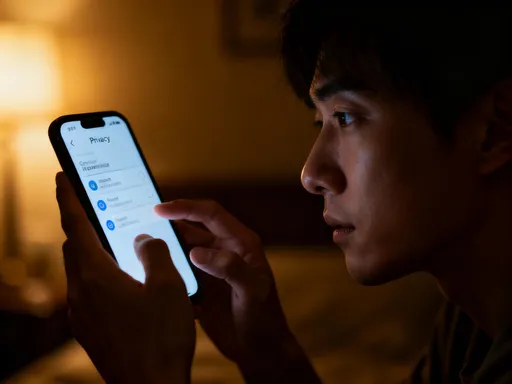
The good news? Taking back control is easier than you think. I did a full permission audit of my phone in one quiet evening—after the kids were in bed, with a cup of tea and zero stress. No tech degree required. Here’s exactly how I did it, step by step, for both iPhone and Android users.
First, I went to my phone’s settings. On an iPhone, it’s the gray gear icon. On Android, it’s similar—usually a gear or a settings app. From there, I looked for “Privacy” or “Apps & notifications.” That’s where all the permission controls live. I started with location. I tapped “Location Services” on my iPhone and saw a long list of apps that had access. Some made sense—Maps, Weather, Uber. But others? A games app I hadn’t opened in months. A restaurant finder I used once. I turned off location access for every app that didn’t absolutely need it. The change was instant. I felt lighter, like I’d locked a few extra doors in my digital home.
Next, I moved to microphone access. This one made me pause. I saw that two kids’ apps and a fitness tracker had microphone permissions. I asked myself: does this app need to hear me to work? The coloring game didn’t. The fitness app used voice commands, so I kept it—but only when in use, not all the time. I switched it to “Allow Only While Using.” Same with the camera. I found three apps that had access but didn’t need it. Gone.
Then came contacts and storage. I was shocked to see how many apps had access to my photos and files. A note-taking app? Fine. A random quiz game? Absolutely not. I revoked access one by one. And for contacts, I removed permissions from anything that wasn’t a messaging or calling app. The whole process took less than an hour. And the best part? None of my apps broke. My favorite tools still worked perfectly. I just stopped giving them unnecessary access. That night, I slept better. Not because I’d done something extreme—but because I’d made my phone mine again.
The Apps That Were Watching Me the Most
Once I cleaned up my permissions, I started noticing patterns. Certain types of apps were far more aggressive in their data requests. Not because they were “evil,” but because their business model depends on collecting information. The biggest offenders? Social media apps, free games, and shopping tools.
Social media platforms like Facebook and Instagram ask for a lot—location, camera, microphone, contacts, storage. And yes, some of it is functional. You want to share photos and tag friends. But do they need constant location tracking? Not really. I changed mine to “While Using” or “Ask Next Time.” Same with microphone access. I don’t need them listening when I’m not recording a story or video.
Free games are another big one. They’re free for a reason—they make money by tracking you. I found a simple puzzle app that had access to my location, camera, and storage. For a game that just shows jigsaw pieces? No way. I removed all permissions except what was essential. And guess what? It still works fine. I can still play my daily puzzle without giving up my privacy.
Shopping apps are sneaky too. They want location to show nearby deals, camera to scan barcodes, and storage to save wish lists. But many keep tracking you long after you’ve left the app. I limited their background location access and turned off ad personalization in settings. The result? Fewer creepy ads, more peace of mind. The key is realizing that just because an app asks for something doesn’t mean it needs it. And you have the right to say no—or say “only when I’m using it.” Most apps will function just fine with limited access. And if they don’t? Maybe it’s time to find a better one.
Small Changes, Big Peace: Living with Intentional Permissions
Since that one evening of cleanup, my relationship with my phone has changed. It’s not just about privacy anymore. It’s about peace. I don’t feel that low-level anxiety of being watched. I don’t get startled by ads that know too much. My phone feels like a tool again—not a spy.
There are practical benefits too. My battery lasts longer. Apps that were constantly pinging for location or running in the background stopped draining power. My phone runs smoother. Notifications are less cluttered because I’m not being bombarded by targeted ads from apps that don’t need my data.
But the biggest change is emotional. I feel more in control. I’ve started doing a quick permission check once a month—just 15 minutes while my coffee brews. I review new apps, remove anything suspicious, and remind myself that I’m the boss of my device. It’s become part of my self-care routine, like tidying up the kitchen or journaling for five minutes. Because taking care of your digital space is just as important as taking care of your physical one.
I’ve also talked to other moms about it. At school pickup, during yoga class, over text. Most of them had no idea how much access they’d given away. Once they learned, they felt the same relief I did. One friend said, “I didn’t realize I could say no. I thought it was all or nothing.” That’s the myth we’ve been sold. But it’s not true. You can have both—modern tools and personal boundaries. It’s about using technology intentionally, not automatically.
Why This Isn’t Just About Privacy—It’s About Power
At its core, managing app permissions isn’t just a tech fix. It’s an act of self-respect. It’s saying, “My time, my attention, my personal life—these matter. And I decide who gets access.” In a world that constantly asks us to give more—our data, our energy, our focus—this is a quiet rebellion. A way to protect what’s yours.
You don’t have to delete every app or go back to a flip phone. You don’t have to become a privacy expert. You just need to pause. To ask, “Do I really need to give this app my location? My microphone? My photos?” And when the answer is no, to tap “Don’t Allow” without guilt.
Because this isn’t about fear. It’s about freedom. The freedom to use your phone without feeling exposed. The freedom to talk, search, and save without being tracked. The freedom to enjoy technology on your own terms. And for busy women—mothers, professionals, caregivers—this kind of control is priceless. We give so much of ourselves every day. We deserve to feel safe, respected, and in charge—both offline and online.
So tonight, after the kids are asleep or during your morning routine, take that 60 minutes. Go into your settings. Review your permissions. Lock the digital doors that don’t need to be open. You don’t have to do it all at once. Start with location. Then move to microphone. Then camera. Small steps lead to big change. And when you’re done, take a breath. Feel that quiet sense of calm? That’s what it feels like to be back in control. Your phone is yours again. And that makes all the difference.