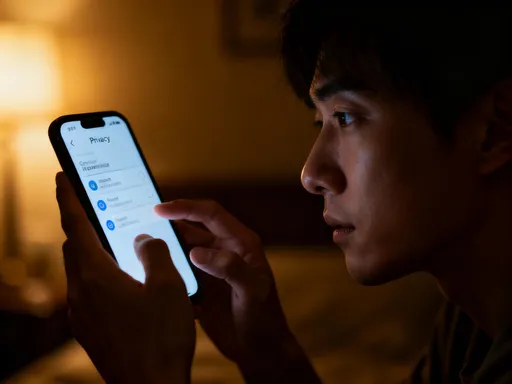
Tucked under the covers, my child would call out, “Just one more story!” or “I’m not sleepy!” Night after night, the routine felt like a battle. Then we discovered smart lighting—and something small changed everything. With a gentle glow that shifted with our mood, bedtime softened. It wasn’t just about turning lights on or off; it was about creating calm, connection, and consistency. This is how a simple tech upgrade became an unexpected tool for parenting peace. If you’ve ever stood in a dark hallway, heart racing from one more negotiation about water or stuffed animals, you know how much bedtime can wear on a parent’s soul. What if I told you that a small change in lighting could quietly transform those tense moments into something softer, more predictable, and even sweet?
The Bedtime Struggle No Parent Talks About
Let’s be honest—bedtime is rarely just about sleep. For most families, it’s the final emotional checkpoint of the day. By 7:30 PM, we’re often running on fumes: kids are overtired, parents are overwhelmed, and even the smallest request can spiral into a full-blown protest. I used to think my child was just stalling. “One more hug,” “I need to go potty again,” “My blanket isn’t right.” Sound familiar? But over time, I realized it wasn’t defiance—it was transition anxiety. Moving from play to rest is a big shift, especially for young minds that don’t yet understand time or routine the way we do.
I tried everything: sticker charts, timers, calming music. Some helped, but nothing created a real sense of closure. The lights were either too bright, making the room feel like a classroom, or too dark, making my child nervous. I needed a signal—a soft, consistent cue that said, “It’s okay. The day is ending. Now it’s time to rest.” That’s when I started wondering: could light itself be the bridge?
What I didn’t expect was how much emotional weight a simple bulb could carry. It wasn’t about brightness or color alone—it was about rhythm, predictability, and feeling safe. And once we found the right kind of light, the nightly power struggle began to fade. Not because my child suddenly loved bedtime, but because the environment started supporting them, instead of working against them.
How Light Shapes Our Emotions and Routines
Light does more than help us see—it shapes how we feel. Think about walking into a softly lit café with warm lamps and candles. You probably feel relaxed, maybe even a little cozy. Now imagine a fluorescent-lit office at 9 PM. Even if you’re tired, the harsh white light keeps your brain alert. That’s no accident. Light directly affects our circadian rhythm, the internal clock that regulates sleep and wakefulness. And one of the most important hormones in that process is melatonin, which helps us fall asleep.
When we’re exposed to bright, blue-toned light in the evening—like from overhead fixtures or screens—our brains think it’s still daytime. Melatonin production slows down, and sleep becomes harder to reach. For kids, whose bodies are still learning to regulate these cycles, the effect is even stronger. That’s why so many children resist bedtime: their bodies aren’t getting the signal that it’s time to slow down.
But warm, dim light—especially in the amber or soft yellow range—does the opposite. It mimics the natural glow of sunset, gently telling our brains, “It’s okay to wind down.” I remember the first time we tried this. We turned off the ceiling light and switched on a small lamp with a warm filter. Within minutes, my child stopped bouncing on the bed and curled up with a book. I didn’t have to repeat instructions. The light did the talking.
This isn’t just anecdotal. Studies from sleep researchers show that reducing blue light and increasing warm tones in the evening can improve sleep onset and quality for both children and adults. The best part? You don’t need a degree in neuroscience to use this. You just need to notice how light makes you and your family feel—and then make small changes that support calm instead of chaos.
Discovering Smart Lighting: More Than Just Remote Control
At first, I thought smart lights were just a convenience thing—something tech-savvy people used to turn on lamps from bed or impress guests. I pictured complicated apps and voice commands I’d never remember. But when a friend mentioned how her kids responded to a “bedtime glow” scene, I started looking into it. What I found surprised me: smart lighting isn’t about control. It’s about care.
These lights let you adjust brightness, color, and timing with just a tap or a voice command. You can set a scene called “Calm Time” with soft amber light, or “Good Morning” with a gentle sunrise effect. Some systems even sync with your daily routine, dimming automatically as bedtime approaches. I started with a single smart bulb in the bedroom—no rewiring, no electrician. I screwed it in, downloaded the app, and within ten minutes, I had a warm, dimmable light that I could control from my phone.
But the real magic happened when I began using light as a signal. Instead of saying, “It’s time to brush your teeth,” I’d say, “Let’s wait for the light to turn soft yellow—that’s our cue.” My child started watching the color change like it was part of the ritual. It wasn’t me enforcing the routine anymore; it was the environment guiding us both.
And here’s something I didn’t expect: the lights helped me slow down too. As a parent, I’m always rushing—dinner, homework, laundry, bedtime. But when the lights began to dim, I felt myself breathe a little deeper. It became a cue for me, not just for my child. That shared rhythm—light, breath, stillness—became something we both looked forward to.
Building Rituals: Using Light to Strengthen Connection
Rituals matter. They give children a sense of safety and predictability. We already use them in bedtime routines: bath, pajamas, story, kiss goodnight. But what if we could add one more layer—one that speaks directly to the senses? That’s where light comes in.
We created a “Wind-Down Sequence” that starts an hour before bed. Dinner is finished, screens are off, and the house begins to shift. At 7:15 PM, the kitchen and living room lights gently dim to 40% brightness and shift to warm white. By 7:30, the bedroom light turns to a soft amber. We call it the “Bedtime Glow.” It’s not instant darkness—it’s a gradual transition, like a visual lullaby.
My child now says things like, “The light is getting sleepy—so am I.” Or, “When the light turns orange, I know it’s almost time for stories.” That awareness—of their own body and emotions—has grown in ways I didn’t expect. They’re not just following orders; they’re participating in the process.
And here’s the beautiful part: it’s brought us closer. Instead of me nagging or repeating instructions, we’re both tuning into the same signal. We light a candle, read a story, and watch the room grow softer together. There’s no pressure, no rush. Just presence. The light doesn’t replace our connection—it deepens it. It’s like having a silent partner in parenting, one that helps us slow down and be in the moment.
I’ve even started using different scenes for different moods. On tough days, we have a “Cozy Comfort” setting with deep warm light and a slow dim. On energetic evenings, we use a “Calm Down” scene to gently bring energy levels back to neutral. It’s not a fix for everything—but it’s a tool that helps us meet our emotional needs without words.
Traveling with Calm: Taking the Routine On the Road
One of the hardest parts of family travel? Sleep disruption. New beds, strange noises, and different lighting can throw off even the most consistent routine. I used to dread hotel stays because I knew bedtime would turn into a battle. The overhead lights were too bright, the nightlight too weak, and my child would lie awake, anxious and overstimulated.
Then I tried something simple: a portable smart bulb and a plug-in smart nightlight. I packed them in my travel bag like I would a favorite book or stuffed animal. When we arrived at the hotel, I screwed in the bulb (most rooms have standard sockets) and plugged in the nightlight. Within minutes, I recreated our “Bedtime Glow” scene. The room filled with the same soft amber light we use at home.
The difference was immediate. My child looked around and said, “It feels like bedtime.” They didn’t protest. They didn’t ask for five more things. They settled in, just like they would at home. It wasn’t the same room, but the signal was familiar. That sense of consistency became our travel superpower.
Now, whether we’re staying with family, in a rental cabin, or a city hotel, I bring our lighting routine with us. It’s not about recreating the entire house—it’s about bringing one anchor point, one signal of safety and calm. And the best part? Other parents in my travel group have started asking about it. “Why is your kid falling asleep so fast?” they ask. I just smile and say, “It’s the light.”
Making It Work for Real Life (No Tech Expertise Needed)
I’ll be honest—I’m not a tech person. I don’t build apps or code smart homes. I just wanted a better bedtime. So when I started looking into smart lighting, I was nervous. Would it be too complicated? Would I need to hire someone? Would the app crash every time we needed it?
Turns out, it’s much simpler than I thought. Most smart lighting systems are designed for everyday users. You don’t need to be a genius to set them up. I started with one bulb in the bedroom—just one. I screwed it in, downloaded the free app, connected it to our Wi-Fi, and within ten minutes, I could control the light from my phone. No tools, no wires, no stress.
The key is to start small. You don’t need to replace every light in the house. Begin with one lamp in the bedroom or reading nook. Choose a bulb that offers warm color options (usually between 2700K and 3000K on the color temperature scale). Then, use the app to create a simple scene—maybe “Bedtime Glow” or “Story Time”—with dimmed, warm light.
And here’s a tip: involve your child. Let them help name the scenes. Ours are called “Dinosaur Relax Mode,” “Butterfly Calm,” and “Moonbeam Sleep.” It makes them feel part of the process, and they’re more likely to respond to a cue they helped create. You can even set a schedule so the light changes automatically—no reminders, no nagging.
If you have a voice assistant like Alexa or Google Assistant, you can link the lights and say, “Hey Google, start bedtime glow,” and the room will shift on command. It’s not magic—it’s just thoughtful design that works with your life, not against it.
More Than Lights—A Smarter, Softer Way to Parent
This small change—adding smart lighting to our bedtime routine—did more than improve sleep. It changed how I think about parenting. I used to believe that good parenting meant more effort: more rules, more reminders, more presence. And while presence is important, I’ve learned that environment matters just as much. When our space supports us, we don’t have to work so hard.
Smart lighting became a quiet partner in our home—one that helps us slow down, connect, and respond with patience. It doesn’t replace bedtime stories or hugs. It doesn’t solve every emotional challenge. But it creates the conditions for calm, for connection, for ease. And in a world that often feels too loud, too fast, too demanding, that’s a gift.
What I love most is that this isn’t about perfection. Some nights, we skip the routine. Some nights, the light stays bright because we’re laughing over a game or finishing a project. And that’s okay. The goal isn’t rigid control—it’s having tools that help us return to calm when we need to.
So if you’re in the thick of bedtime battles, if you’re tired of repeating yourself, if you long for a little more peace at the end of the day—consider the light. Not as a gadget, but as a gentle guide. A signal. A shared language. Sometimes, the softest glow can lead us back to what matters most: being present, together, in the quiet moments that shape our lives.